
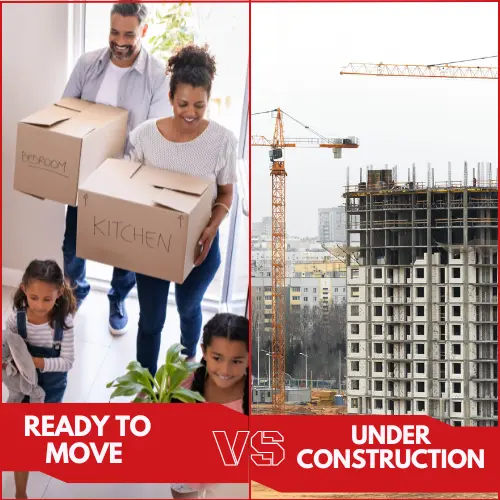

Ready-to-Move vs Under-Construction: What Works Best for Families?
Investing in a property is a crucial decision which each home owner has to undergo with it. One of the greatest decisions here comes is which one to choose, ready-to-move or under construction work? Each option has its own pros and cons and choosing the suitable one will have impact on your finances, long-term comfort and lifestyle. Also, there are some common home buying myths which you should know.
In this blog we will compare under construction work with ready-to-move properties with an emphasis on what works well for families. We will also spotlight the importance of checking all the Legal documents for buying property to let you make informed decision.
Understanding the Basics
Before jumping into comparison, let’s know the meaning of each term:
- Ready-to-move: These are completed buildings in which you can shift immediately after purchase. It is ideal for buyers that want to avoid project delays
- Under construction: These are properties that are still developing. In such condition buyers can get flexible payment options with comparatively lower prices. But these properties are not immediately livable.
Both types of properties have their significant presence in the market, but which one to choose will completely depend on your financial factor and the delay you can accept for getting a new home.
Advantages of Under construction Properties for Families
There are families that give preference to under construction properties because of their cost-effectiveness and customized options. Let’s take a look on some of the notable benefits of under construction properties:
Less initial investment
Buying an under construction property is more affordable than ready-to-move homes. This allows home buyers to get homes at better locations or larger spaces at an affordable range.
Payment Flexibility
Buyers are supposed to make the payment as per the construction plans, thus minimizing financial burden. Families get time to manage finances while the property is being built. This time flexibility allows home owners to improve their credit score, before applying for any loan.
Modern Infrastructure
Newly under construction buildings usually comprise of modern amenities like parks, play areas and security features. All these features increase the comfort level of buyers.
Potential for value appreciation
Under construction projects experience price appreciation after completion of construction work. This offers long-term financial benefits.
Customization Options
In early construction stage, buyers can request minor structural changes to the builder- like adding children room layout tweaks. This feature is missing in ready-to-move homes.
However, you must check all the legal documents for buying property while choosing any under construction home to avoid any trouble in future. These documents are land titles, building permits, RERA registration and developer agreements.
Drawbacks of Under construction Homes
Despite of above benefits, below are some negative aspects of under construction properties that you must consider:
Delayed Possession
Project delay is common here. This option is not suitable for families looking for immediate housing.
Quality Uncertainty
You may not get what you see. Unlike ready-to-move homes, you can’t see the final outcome and it may differ from those images present in the brochures.
Risk of Incomplete Projects
The under construction project may get abandoned due to any legal or financial issues from builder’s end. Evaluating all the legal documents for buying property can minimize this risk.
Temporary Accommodation Costs
While waiting for project completion, many families need to live in rented homes; this will be an additional expense for them.
Benefits of Ready-to-Move Properties for Families
Home owners looking for immediate housing and comfort, ready-to-move properties will be the best option.
Instant Possession
You can get the possession as soon as you purchase the house. Thus you don’t have to wait for long duration to get home.
What You See Is What You Get
No guesswork in completed projects. You can inspect the property, locality, and layout before buying it.
Established Neighborhood
Usually, developed properties are present in developed locations with existing markets, schools and transportation. This increases comfort level.
No GST Charges
Unlike under construction properties, GST charges are exempted in ready-to-move homes, thus making them slightly affordable in the final cost.
Reduced Risk
No risk of construction delay is involved and families can check all legal documents for buying property with legal consultants or existing residents.
Drawbacks of Ready-to-Move Properties
Although you can remain assured of security in ready-to-move homes, but it still has some drawbacks:
Higher Cost
These properties are expensive as builders take advantage of finished construction and location.
Limited Customization
You can’t make any structural design changes in ready-to-move homes and hence it comes with limited personalized options.
Older Construction
Based on the property’s age, you may need some renovation or repair work which will further increase the cost in long run.
Even you have bought a ready home, you still need to check all the legal documents for buying property- this include occupancy certificates, completion certificates and property tax receipts.
Which is Better for Families?
Choosing between ready-to-move or under construction property will depend on your immediate needs, risk tolerance capacity and financial flexibility.
Go with under construction if:
- You can wait for 2-3 years before moving to your new home.
- You want affordable homes with long-term investment value
- You want new construction work and designs.
- You want financial flexibility.
Go with Ready-to-Move if:
- You are not in a hurry to move in your new home.
- You don’t want any uncertainity.
- You have budget to buy home at slightly higher rates.
- You want completely developed neighborhoods.
Whatever is your choice, you must check all the legal documents for buying property. You can hire a real estate lawyer for this work to check the authenticity of the documents and ensure that there are no financial liabilities or missing documents.
Final Thoughts
Financial investment is not the only aspect for families for buying new home. Instead, they also expect comfort, security and stability from that property. While under construction properties come with desired flexibility, they involve potential risks which you need to manage. Ready-to-move homes on the contrary provide certainty but are bit expensive.
To avoid future complications, families must check all the legal documents irrespective of the property type they will choose. The due diligence provides peace of mind for a rewarding homeownership experience.


